Galina Kurlat
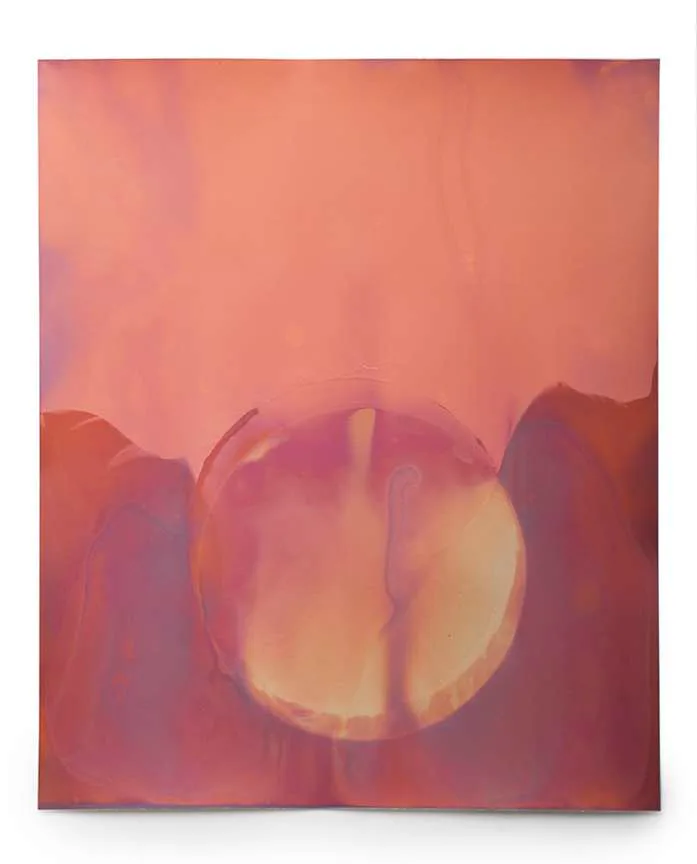
Witness Marks: Toward the Unseen is a collaborative exhibition featuring female artists whose practices explore the fluid, often elusive interplay between memory, material trace, time, and photography. The exhibition’s title draws from horology, where a witness mark refers to a trace left behind by a moving part. In this context, it becomes a metaphor for the way photographs act not only as records, but also as impressions, fragments, and echoes of what once was. The exhibition asks: What remains imprinted in the still frame, and what slips away? The works on view challenge the notion of the photograph as a fixed truth. These artists play with photography’s unique ability to both preserve and distort, drawing from personal histories, documentary practices, and historical processes. Their works become witness marks in themselves— subtle, intentional traces left in time—inviting viewers to reflect on their own relationships to memory, identity, and visual history. becoming witness marks themselves: subtle, intentional traces suspended in time. The exhibition invites viewers to reflect on their own relationships to memory, perception, and the enduring aftermath of visual experience. GALINA KURLAT: VESTIGE Vestige is a series of lumen prints in which ephemera from my body directly interacts with silver gelatin paper, creating a non-representational self-portrait. In these color-scape photograms, the female form, which is subjected to an onslaught of societal pressure and objectification, defies conventional representation, appearing as mark-making and surface disruptions on photographic paper. Lush pinks, mauves, and reds directly engage a "female" palate while subverting the recognizable for the abstract. Throughout the series, the repetition of the circle is not a direct reference to the body, but a nod to its absence. Lumen prints are a historic photographic process; they are made by exposing silver gelatin paper to light for extended periods. The paper develops outside the darkroom, needing only sodium thiosulfate to fix the image. By making these photograms outdoors, I connect my body to the environment I live in. Day-to-day changes in light and temperature directly affect the individual print's outcome. Although these images resemble paintings, they are fundamentally photographic; the colors and their variations directly relate to the type of paper used, exposure time, and UV in the light source. This project is a natural extension of my work with figurative and portrait photography. Instead of a classic depiction of my body, these images reinterpret the gaze by eliminating sensuality (the body) for the sublime (abstraction), creating a new self-portrait while challenging representation of the corporeal. Here, the physical remnants of my body are an affirmation and serve as evidence of my existence. These images become a collaboration between process and intention while addressing themes of identity, mortality, and the body from a uniquely female perspective.